Fashionality NYC: A Nordic Affair in Milano – Inside the CIFF x 10 Corso Como Pop-Up Everyone Is Talking About
Fashionality NYC, February 2026, Elena Sendona
There is a particular kind of energy that descends upon Copenhagen during Fashion Week — a quiet, almost meditative intensity that feels decidedly un-New York, un-Paris. It is the kind of city that has always understood something essential about the relationship between design and daily life, and this January, that understanding was given a spectacular new stage. At the heart of CIFF’s 66th edition, housed within a sprawling 600-square-meter space at the Bella Center, a collaboration between the Copenhagen International Fashion Fair and Milan’s legendary 10 Corso Como has opened — and it is one of the most compelling retail experiments to emerge from a fashion week in recent memory.
The partnership, which has been quietly building since late 2025, represents something of a cultural pivot for both institutions. For CIFF, long regarded as Northern Europe’s most significant fashion and lifestyle trade platform, this marks its first foray into direct-to-consumer retail. Visitors to the space — available through January 29 — were able to purchase pieces from participating brands on the spot, a departure from the traditional business-to-business model that has defined the fair for decades. It is, in the language of the industry, a new chapter; in practice, it feels like a revelation.
10 Corso Como, for its part, has spent the better part of three decades perfecting the art of turning shopping into something closer to a cultural pilgrimage. Founded in Milan in 1991 by gallerist Carla Sozzani, the space was among the first in the world to deliberately blur the boundaries between commerce and culture, weaving together fashion, design, art, food, and literature under one roof. Since entrepreneur and retailer Tiziana Fausti took the helm in 2020, the concept store has been on a quiet but determined expansion, testing its curatorial philosophy in new cities and new formats. Copenhagen, it turns out, is the perfect place to do so.
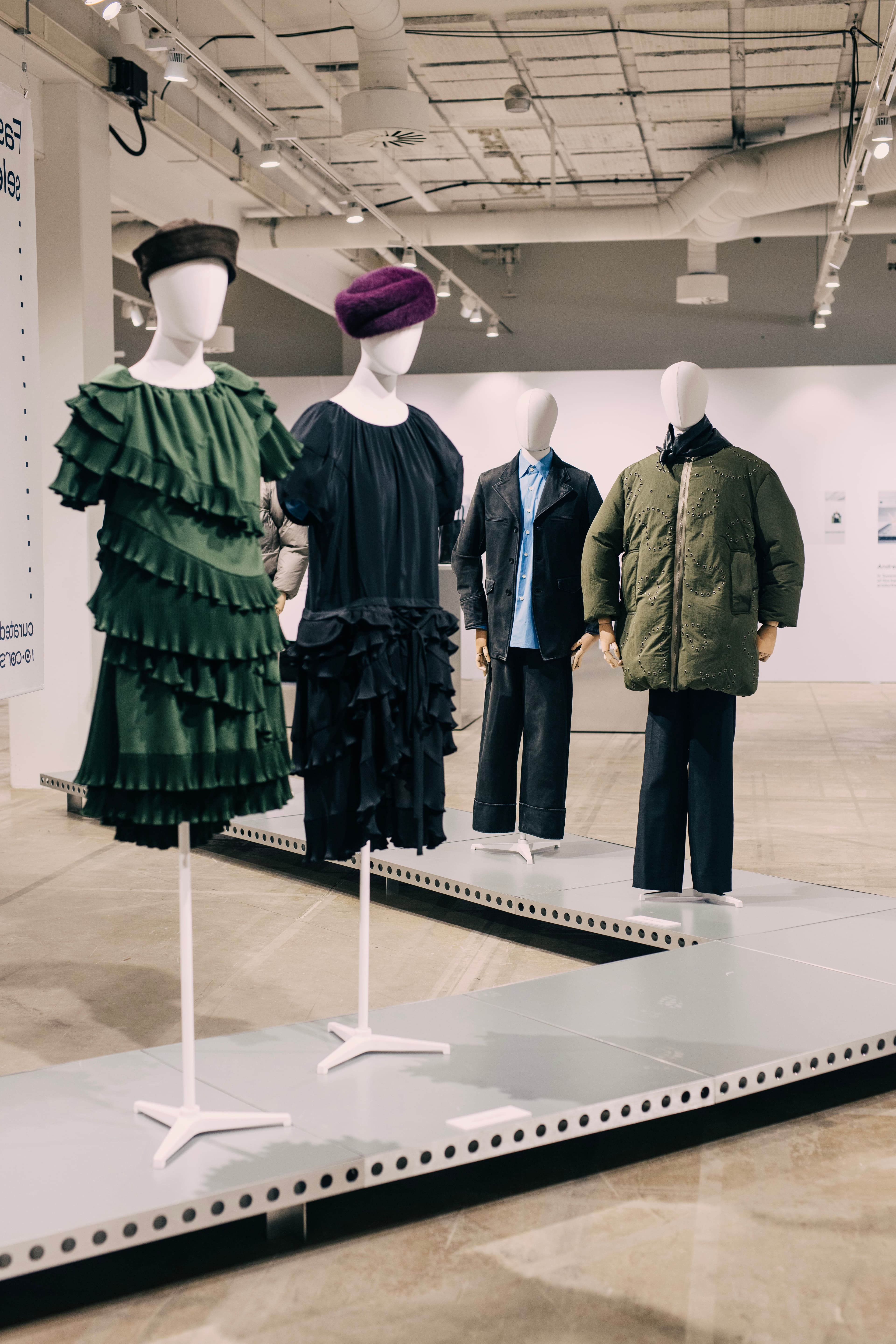
The CIFF space was curated through what can only be described as the unmistakable 10 Corso Como lens — a selective, considered arrangement that felt more gallery than trade floor. At its center, a timeline installation traced the retailer’s own history since its inception, a kind of visual essay on the evolution of experiential retail. From there, the space opened into a carefully chosen roster of Scandinavian brands, handpicked by the 10 Corso Como team: Cecilie Bahnsen, whose sculptural “everyday couture” has earned her a place on the Paris Fashion Week calendar and a devoted global following; Hodakova, with its quietly radical approach to tailoring; Namacheko, whose collections bridge Eastern European textile traditions with a thoroughly modern sensibility; Heliot Emil; Louis Abel; Melyon; Mismo; Monies; Petra Fagerström; Rolf Ekroth; Obayaty; Porcelain Perfumery; Lernberger Stafsing; and Tromborg. Alongside these, visitors encountered the 10 Corso Como Signature Collection, a selection of rare and vintage books, and a café experience reimagined through a Nordic filter — a nod to the concept store’s long-held belief that the best retail spaces should nourish the mind as much as the wardrobe.
Alessio de’ Navasques, the cultural program curator at 10 Corso Como, spoke openly about the intentions behind the collaboration. The project, he explained, was conceived as a platform for genuine cultural exchange — a way of bringing Scandinavian design sensibilities into conversation with the Italian retail tradition that 10 Corso Como has spent over thirty years cultivating. The similarities between the two design cultures, he noted, are deeper than geography might suggest: a shared reverence for craftsmanship, for beauty, for the idea that the objects we surround ourselves with should carry meaning.
For CIFF director Sofie Dolva, the collaboration signals something larger about where the fair is headed. The space at CIFF was positioned at the very entrance of the fair — a deliberate choice, placing the 10 Corso Como experience as the first thing visitors encountered upon arrival. Dolva has been candid about her ambitions to evolve CIFF beyond its traditional role as a meeting ground for buyers and brands, and this partnership is the clearest expression of that vision to date. The goal, she has articulated, is to demonstrate how retailers and trade fairs can coexist in more inventive, culturally resonant ways — how a space designed for industry professionals can simultaneously become a destination for curious consumers.
What makes the whole endeavor particularly compelling is what comes next. The two organizations announced during Copenhagen Fashion Week that the concept will travel to Milan in June 2026, during Milan Fashion Week Men’s. The Milan edition will be curated around a selection of Nordic brands — Tromborg, Porcelain Perfumery, Obayaty, and Lernberger Stafsing among them — and will include activations and special projects hosted throughout the pop-up period. It is, in effect, a reversal of the Copenhagen experiment: where CIFF brought the 10 Corso Como world north, the Milan edition will carry the Nordic creative universe south.
Valentina Galbiati, 10 Corso Como’s visual merchandising and brand development manager, offered a refreshingly candid assessment of the retailer’s intentions. The Copenhagen pop-up, she acknowledged, functions partly as a test — an opportunity to learn from a smaller, more intimate version of the 10 Corso Como ecosystem before scaling further. The brand selection was deliberate, reflecting both labels the retailer already carries in its Milan flagship and those it is actively considering for future partnerships. Beauty, in particular, has emerged as a category of growing importance for 10 Corso Como’s clientele, and several of the Nordic brands featured in the space — Porcelain Perfumery and Tromborg chief among them — speak directly to that appetite.
There is something quietly radical about what CIFF and 10 Corso Como have put together, even if on the surface it might appear simply well-executed. In a market defined by uncertainty, where the traditional rhythms of fashion retail have been so thoroughly disrupted, the collaboration offers a different kind of proposal: that fashion, beauty, design, and culture can coexist in a single space without any one of them diminishing the others. That a trade fair can be a cultural event. That a pop-up can feel permanent. That the distance between Milan and Copenhagen — between two cities that have, in their own distinct ways, shaped the global conversation around design — can be collapsed into something as intimate as a 600-square-meter room. Watch this one. The road from Copenhagen to Milan in June will be worth every step.